You get one chance to make your Battery Park City condo stand out. In a neighborhood where views, parks, and building amenities do a lot of the talking, thoughtful preparation is what turns casual interest into real offers. If you plan to sell within the next year, a focused plan can help you hit the market with confidence and take control of your timeline.
Below is a step-by-step guide tailored to 10280. You’ll learn what to do first, how to stage for smaller city footprints, when to shoot photos for the best light, and which documents buyers will ask for right away. Let’s dive in.
Know the Battery Park City context
Battery Park City is a planned waterfront neighborhood with over a third of its land as parks and open space. That setting is a major draw and a core part of your listing story. If a buyer can picture a daily walk to the river or a sunset from your windows, you’re already ahead. For a quick primer on the neighborhood’s design and history, see the overview of Battery Park City.
Market trackers often show a wide range of median prices in BPC because it is a small submarket and reports use different time frames. Treat those medians as context and price from true, recent comps in 10280. Days on market in this area can run several weeks to a few months, so presentation and timing are key to catching attention early.
Why presentation matters in 10280
Buyers consistently respond to Hudson and Harbor views, proximity to waterfront parks, and useful building amenities. Put those features front and center in your photos and copy. When you pair that story with a bright, move-in ready look, you often lift perceived value and speed.
BPC is also advancing major resiliency work. Wagner Park reopened in July 2025 with new flood protection features, part of a broader plan to secure the shoreline. You can read about the reopening in this coverage of Wagner Park’s resiliency upgrades.
Step-by-step prep plan
Start with building and legal items
Get your building documents together now. That includes bylaws or house rules, offering plan (for condos), recent financials, common charge or maintenance statements, and notices about any planned assessments or capital work. If you live in a co-op, your agent can help you plan for a board package and timing.
Review typical transfer costs with your attorney so there are no surprises. New York City’s Real Property Transfer Tax is tiered for residential sales, and the State has its own layers. You can confirm current NYC RPTT details on the NYC Finance page.
Be proactive about flood risk. Many Lower Manhattan blocks appear on FEMA flood maps. If your building has flood insurance history or completed flood-related repairs, gather that documentation. You and your buyer can review official maps at the FEMA Map Service Center.
Declutter and open your sightlines
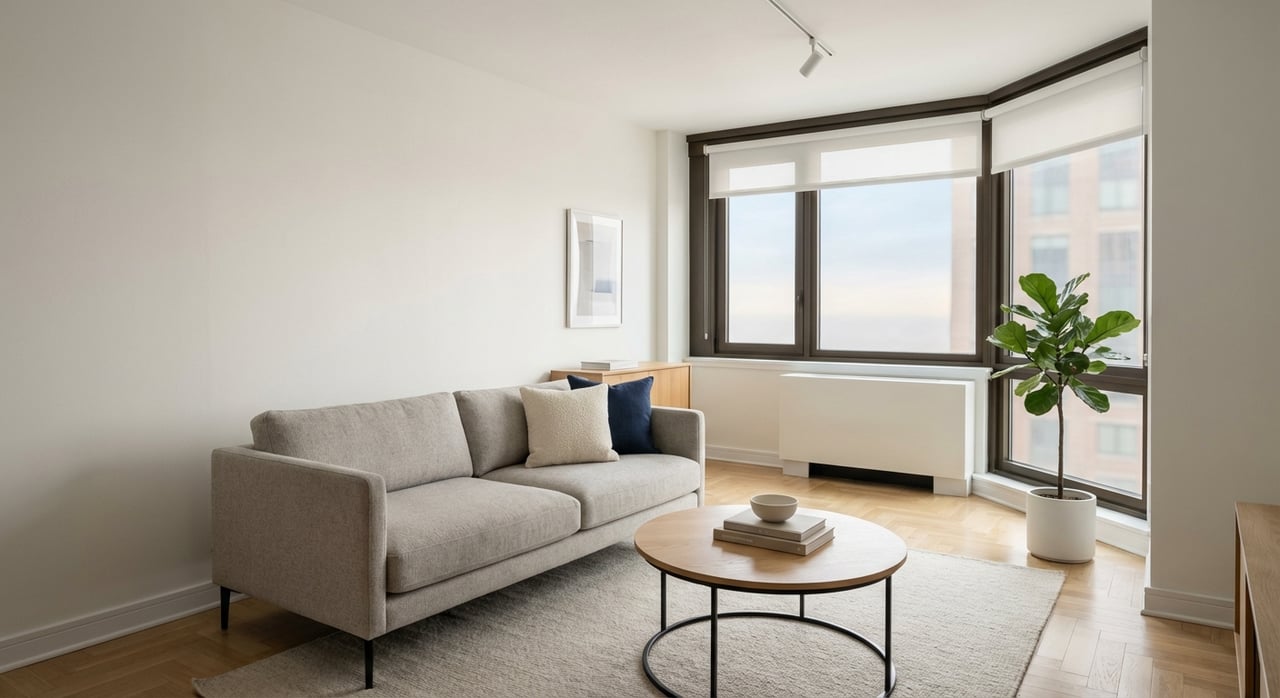
The goal is simple: make every room feel larger and direct the eye to the windows. Remove personal photos and reduce nonessential items by about a third. Edit furniture so you can see from entry to view without blockage. Clear kitchen and bath counters and store any bulk items off-site.
Small changes make a big difference in photos. Keep a single, neutral rug in the living area and use low-profile seating to keep the window line visible. The more a buyer can absorb the room with one glance, the more your listing will stand out online.
Handle quick fixes with a light pre-inspection
If you choose a pre-listing inspection, you can catch simple issues before buyers do. Repair leaky faucets, cracked grout, loose hardware, scuffed walls, and sticky doors. Replace burned-out bulbs and aim for consistent, warm-white lighting across the apartment. Presenting a short list of recent repairs with receipts helps buyers feel at ease.
Paint and finishes that photograph well
A fresh coat of paint in a light, neutral color is one of the highest-return updates in a city apartment. Whites with a higher light reflectance value can make smaller rooms feel bigger in photos. A widely used option is Benjamin Moore’s Simply White. Test sample patches in your space and lighting first. Use eggshell or satin on walls for a clean look and matte on ceilings.
Stage for smaller footprints and the view
Staging works. Industry data shows it can lift perceived value and reduce time on market. For a deeper look at the impact, see the National Association of Realtors’ summary on how staging influences buyers.
For BPC condos, focus on:
- Living room: It is the top priority. Remove pieces that block windows. Use slim-legged chairs and a low sofa to keep the sightline clean. Practical guidance for small-space layouts is outlined in this take on staging small NYC apartments.
- Primary bedroom: Keep it airy and calm. Neutral bedding, matching lamps, and clear nightstands help rooms feel larger.
- Kitchen and baths: Clear counters, uniform hardware, fresh caulk, and a single accent tray in each space.
- Balcony or terrace: Treat it as extra living space. A compact bistro set and minimal greenery show scale without crowding. For budget-friendly styling ideas, review this guide to staging small NYC apartments on a budget.
Use one restrained accent color to tie pillows and a throw together. Add a large mirror opposite the main window to bounce light and frame the water or skyline where possible.
Nail the media: photos, floor plan, and 3D
What to order
Strong media drives showings. Plan for 25 to 40 edited photos, a precise floor plan, and a 3D tour when possible. These elements help out-of-town buyers engage and reduce repeat questions. For scope and cost context, see this overview of professional real estate photography packages.
Hero images should include your main living area (with the view framed), the primary bedroom, kitchen, balcony or terrace, and key building amenities. If your unit has a dramatic water or Statue of Liberty outlook, schedule at least one twilight or blue-hour shot for impact.
Time the shoot for light
Light can make or break a listing in BPC. For west-facing units, late afternoon through blue hour often produces warm, balanced interiors and glowing water. East-facing units tend to show best in the morning with soft, direct light. Work with your photographer to plan the timing, as outlined in these real estate photography lighting tips.
Twilight images can draw extra attention when your view is a selling feature. Turn on all interior lights, tidy cords, and let your photographer bracket exposures for a clean window-to-interior balance.
Hire the right pro
Ask to see Manhattan or waterfront work in their portfolio. Confirm HDR processing, twilight capability, and whether a floor plan or 3D tour is included. Clarify turnaround time and usage rights for MLS and social media. In Lower Manhattan, aerials require a licensed operator and airspace approvals, and buildings may restrict drone use. If you consider aerials, rely on a professional and confirm permissions in advance.
Sample 8–12 week timeline and budget
- 8–12 weeks out: Interview local agents, order a pricing analysis, request building documents, and start packing non-essentials. If you plan a pre-listing inspection, schedule it now.
- 4–6 weeks out: Complete repairs, choose paint colors, and repaint high-impact rooms or the full interior. Lock in your stager or plan for virtual staging, and reserve a photographer.
- 1–2 weeks out: Install staging, deep clean, refresh caulk and grout, and schedule photography for a clear-weather day at the best light.
- Listing week: Launch, hold the first showings, and monitor feedback. The first 7 to 14 days often set the tone, so lead with your strongest hero image.
Budget tips:
- Painting: Get two to three local quotes based on your square footage and scope.
- Staging: Physical staging for a 1–2 bedroom city condo can range from a few hundred to several thousand dollars, depending on rooms staged and building logistics. Virtual staging is often under $100 per photo and can be an efficient supplement.
- Photography and media: Professional packages commonly run a few hundred dollars, with add-ons for twilight and 3D tours. Use the package that supports your price point and buyer profile.
Pre-answer buyer questions with documents
Have these ready as PDFs to speed decisions and reduce back-and-forth:
- Flood and insurance history; any post-storm or resiliency-related repairs. Confirm your building’s location on the FEMA flood maps.
- Building financials, bylaws or house rules, any scheduled or potential assessments, and move-out/elevator reservation policies.
- Recent common charge or maintenance statements and a recent property tax or condo unit bill.
- Notices or timelines for neighborhood resiliency work that could impact access to parks or amenities. Project updates appear at the Battery Park City Resiliency site.
Quick checklist you can save
- Confirm your building’s sale rules and move-out procedures.
- Book short-term storage and pack non-essentials early.
- Fix high-visibility items first: lighting, plumbing drips, grout, hardware, and paint touch-ups.
- Decide on a light, neutral paint scheme and test samples in your lighting.
- Contract a photographer who can handle twilight shots and provide a floor plan and 3D tour.
- If you choose physical staging, coordinate elevator and loading dock windows with management.
Local resiliency and transparency
Resiliency work is an ongoing strength of the neighborhood and a practical factor in your sale. Wagner Park’s 2025 reopening added flood protection while preserving park access. Share any building notices about waterfront or streetscape work that may affect access during your buyer’s first year. Proactive disclosure builds trust and reduces surprises at the contract stage.
Ready to list with confidence
When you prepare early, stage with intention, and time your media to the light, you give buyers a clear reason to act. Pair that with smart pricing and complete documents, and you enter the market ready for strong first-week momentum.
If you want a marketing-first plan tailored to your 10280 condo, including staging coordination, professional photography, and negotiation strategy, reach out to Chris Pasquale. Let’s make your Battery Park City listing the one buyers remember.
FAQs
What should I know about selling a Battery Park City condo in 10280?
- Focus on view-forward staging, bright neutral paint, and timing photos for the best light. Gather building documents and flood-related records early to keep offers moving.
Do I need to disclose flood risk when selling in Battery Park City?
- Yes. Share known flood history and related repairs, and provide context using FEMA’s official maps at the FEMA Map Service Center.
How important is staging for a smaller Manhattan condo?
- Very. Staging helps rooms read larger, highlights the view, and can reduce time on market. Keep layouts simple, remove window-blocking items, and use one consistent accent color.
When is the best time of day to photograph a west-facing BPC unit?
- Late afternoon into blue hour often produces the most compelling mix of warm interior light and dramatic water views. Coordinate exact timing with your photographer.
What listing media should I invest in besides photos?
- At minimum, include a precise floor plan. A 3D tour is a strong add for remote buyers. If your view is a key feature, add a twilight hero image.
What costs should I expect to pay as a NYC seller?
- Budget for broker commission, NYC and NYS transfer taxes, and any building-specific fees or flip tax. Confirm current NYC RPTT details on the NYC Finance site.