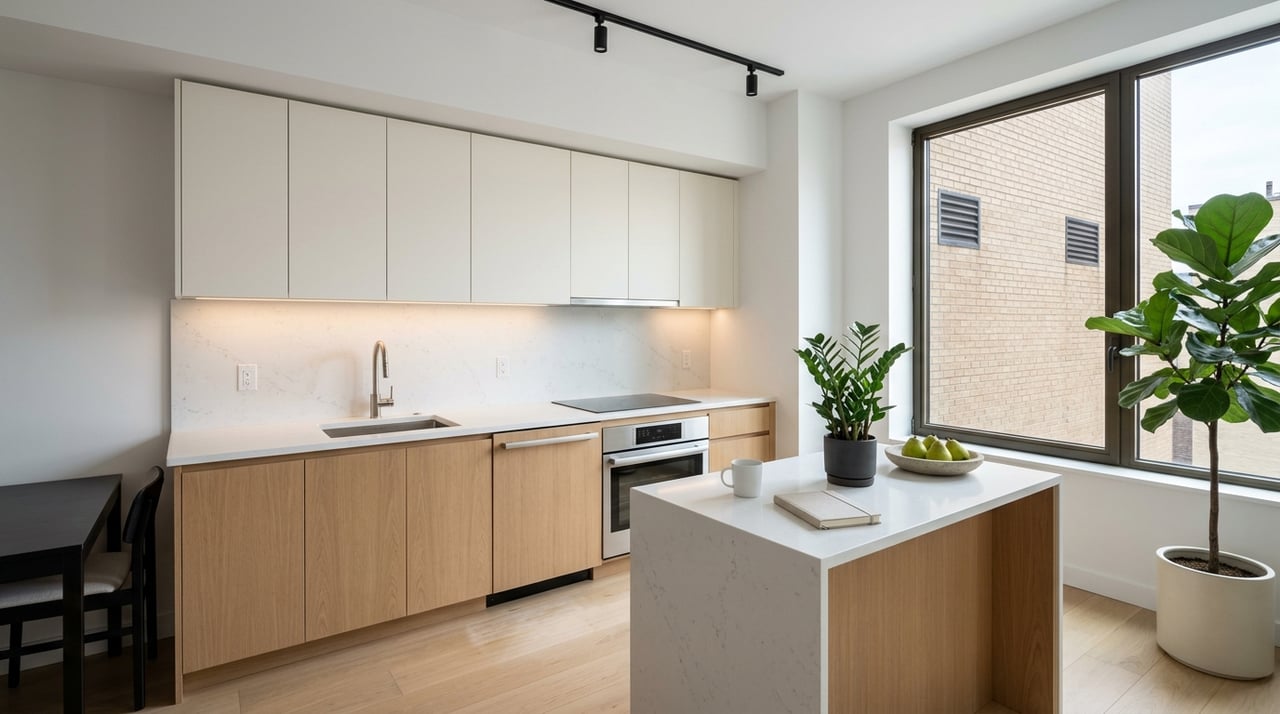
Buying your first home in Manhattan can feel like choosing between convenience and comfort. Midtown makes that choice especially sharp because it puts you at the center of the city, but often at a price that demands careful tradeoffs. If you are wondering whether Midtown is the right place for your first home, this guide will help you weigh cost, commute, building type, and day-to-day lifestyle so you can make a smarter decision. Let’s dive in.
What Midtown Really Offers
Midtown is not a typical residential neighborhood in the way many buyers picture one. It is one of New York City’s biggest business districts, with a built environment shaped by offices, retail, mixed-use towers, heavy foot traffic, and major transit access.
That matters because your first-home experience here will likely feel different from buying in a more residential part of Manhattan. In some areas, the streets stay busy with commuters and visitors throughout the day, while other pockets become quieter after office hours. If you love energy and access, that can be a plus. If you want a calmer, more neighborhood-style feel, it may be a drawback.
Midtown Home Prices for First-Time Buyers
Midtown pricing can look confusing at first because different platforms report very different numbers. That does not mean the data is wrong. It usually means each source is tracking different building types, boundaries, and listing methods.
Here is the bigger picture: Midtown is not one uniform market. Your budget can stretch very differently depending on whether you are looking at a co-op, a condo, or a luxury high-rise.
| Market Snapshot | Reported Figure |
|---|---|
| StreetEasy median sale price | $950,000 |
| Realtor.com median for-sale price | $1.35M |
| Zillow median list price | $1,970,500 |
| PropertyShark Central Midtown median sale price | $1.7M |
| PropertyShark median co-op sale | $734,000 |
| PropertyShark median condo sale | $2.2M |
For a first-time buyer, the most useful takeaway is simple: building type matters a lot in Midtown. Based on current Central Midtown data, co-ops are often a more realistic entry point than condos. That will not be true for every building, but it is a helpful starting point when you are trying to set expectations.
Why Midtown Can Make Sense
For some first-time buyers, Midtown works because it solves one major problem better than almost anywhere else: getting around. If your work, social life, or family routine depends on fast access across the city or into the suburbs, Midtown can be incredibly efficient.
Grand Central Terminal connects you to Metro-North, the 42 Street-Grand Central subway complex, and multiple bus routes. Grand Central Madison adds direct Long Island Rail Road access on the east side, while Penn Station gives you Amtrak, NJ TRANSIT, PATH, and subway connections. If you commute often, that kind of access can save real time every week.
You may also like Midtown if you want daily walkability to major destinations. Broadway, Rockefeller Center, Fifth Avenue shopping, Grand Central, dining, and the southern edge of Central Park are all part of the appeal. For buyers who want to live in the middle of the action, Midtown delivers.
Where Midtown Can Be Tough
The same features that make Midtown convenient can also make it hard for some first-time buyers to love long term. Density is not just an abstract idea here. It shows up as busier sidewalks, more noise, more tourist traffic, and a less residential feel than many nearby neighborhoods.
Space can also be a challenge. If your budget is fixed, you may find yourself choosing between a smaller Midtown apartment and a larger or less expensive option nearby. For many buyers, that is the real decision, not whether Midtown is good or bad in general.
This is why Midtown often works best when centrality matters more to you than quiet blocks or space efficiency. If your top priority is getting more room for your money, Midtown may be more useful as a benchmark than as your final destination.
Co-op vs Condo in Midtown
One of the biggest first-time buyer decisions in Midtown is whether you are really shopping for a co-op or a condo. In New York, that choice shapes your budget, your ownership structure, and the review process.
In a co-op, you buy shares in a corporation and receive a proprietary lease for your apartment. You also pay maintenance charges, and the building is governed by a board elected by shareholders. In a condo, you own the unit itself plus an interest in the common elements.
For many first-time buyers, the financial gap is hard to ignore. Current Central Midtown data shows a much lower median price for co-ops than condos. That means co-ops may open doors in Midtown that condos simply do not, especially if you want to stay within a more practical entry budget.
What to review before buying
The New York State Attorney General recommends careful review before buying either a co-op or condo. That includes reading the offering plan, reviewing financial reports and board minutes, and inspecting the building for defects.
In existing buildings, you should pay close attention to major systems and repair risks, including:
- Facade condition
- Roof condition
- Elevator systems
- Plumbing
- Electrical systems
- Boiler repairs or replacement needs
For a first-time buyer, this matters just as much as the purchase price. A lower-priced apartment can become much more expensive if the building is heading into major repair work.
How Long Homes Sit on the Market
Timing is another reason Midtown can appeal to first-time buyers who want room to think. StreetEasy reports 54 days on market, while Realtor.com reports 68 days on market. Those figures are not identical, but both suggest that Midtown is not always a blink-and-you-miss-it market.
That can give you a chance to compare options more carefully, especially if you are sorting through building rules, monthly costs, and location tradeoffs. It does not remove competition, but it can make the process feel less rushed than some buyers expect.
Questions to Ask Before You Buy in Midtown
Before you decide Midtown is your first-home target, it helps to pressure-test the decision with a few honest questions.
Is the commute benefit worth the price?
If Midtown cuts a stressful commute in half or gives you direct access to rail lines you use often, that convenience may justify the premium. If you work remotely most of the time, the value equation may look very different.
Are you comfortable with co-op rules?
Because co-ops can be a more realistic entry point, you should be ready for their governance structure and document review process. If that feels manageable, Midtown may open up more options than you first assumed.
Do you actually need a condo?
A condo may offer features or flexibility you want, but Midtown condo pricing can be steep. It is worth asking whether the price premium truly matches your needs or whether a co-op could serve you just as well.
Have you compared nearby areas?
StreetEasy’s nearby neighborhood data shows lower median sale prices in places like Murray Hill, Long Island City, and Lincoln Square. That does not automatically make them better. It does mean you should compare Midtown against alternatives instead of treating it as the default choice.
Who Midtown Fits Best
Midtown tends to be a strong fit if you are the kind of first-time buyer who values efficiency, access, and being close to everything. You may be a good match if you want a walkable, transit-connected lifestyle and you are comfortable trading some quiet and space for location.
It can also work well if you understand the local housing stock and are open to co-ops. In many cases, that is where first-time buyers find the most realistic opportunities in this part of Manhattan.
On the other hand, Midtown may not be the best fit if your top goals are space, a more traditional residential atmosphere, or the lowest possible entry price. In that case, comparing nearby neighborhoods building by building can lead to a better outcome.
The Bottom Line on Midtown
Midtown Manhattan can absolutely be the right place for your first home, but only if its strengths match your priorities. The biggest reasons to buy here are transit access, central location, and a fast-moving urban lifestyle. The biggest reasons to hesitate are pricing, density, noise, and a less residential feel.
The smartest way to approach Midtown is not to ask whether it is good in general. Ask whether it works for your budget, your commute, and your comfort with co-op or condo ownership. If you take that view, you will be in a much better position to buy your first home with confidence.
If you want help comparing Midtown to nearby Manhattan options, reviewing co-op versus condo tradeoffs, or building a realistic first-time buyer strategy, Chris Pasquale offers hands-on guidance with a local, boutique approach.
FAQs
Is Midtown Manhattan a good place for a first-time homebuyer?
- Midtown can be a good fit if you value transit access, walkability, and central location more than space or a quieter residential setting.
Are co-ops or condos more affordable in Midtown Manhattan?
- Current Central Midtown data suggests co-ops are often the more affordable entry point, with a much lower median sale price than condos.
What is the median home price in Midtown Manhattan?
- Reported prices vary by source, with figures ranging from about $950,000 to nearly $2 million, which reflects differences in boundaries, listing methods, and building types.
Is Midtown Manhattan more expensive than nearby neighborhoods?
- Midtown can be more expensive than some nearby alternatives, and StreetEasy’s nearby-neighborhood data shows lower median sale prices in places such as Murray Hill, Long Island City, and Lincoln Square.
What should first-time buyers review in a Midtown co-op or condo building?
- You should review the offering plan, financial reports, board minutes, and the condition of major building systems such as the facade, roof, elevators, plumbing, electrical, and boiler.
How important is transit when buying a first home in Midtown Manhattan?
- Transit is a major part of Midtown’s value because the area offers strong access through Grand Central, Grand Central Madison, and Penn Station connections.