If you picture New York loft living as high ceilings, big windows, open layouts, and a neighborhood that keeps you connected to the city all day, Flatiron belongs on your list. This part of Manhattan blends historic building stock, modern convenience, and a distinctly active street scene, which makes it appealing if you want a home with character and a central location. Whether you are buying, renting, or simply narrowing your search, understanding what loft-style living really means here can help you make a smarter move. Let’s dive in.
What loft-style living means in Flatiron
In Flatiron, loft-style living usually comes from adaptive-reuse buildings rather than newly built homes designed to imitate the look. According to New York City Planning, the district is primarily commercial, with mixed-use residential buildings and structures dating back to the turn of the century. That older building stock helps explain why the area can offer the scale, proportions, and industrial character many buyers associate with loft homes.
If you are searching here, it is helpful to know that many residences are better described as loft-like conversions. Former office, store-and-loft, and warehouse-style buildings have been repositioned for residential use, while newer condo and rental towers add a more modern option to the mix. In other words, Flatiron gives you both historic character and contemporary product, depending on the building.
Why Flatiron suits loft buyers
Flatiron feels more like a live-work district than a quiet residential pocket, and that is part of its appeal. The Flatiron NoMad Partnership reports that the district includes 36 million commercial square feet, more than 100,000 daily workers, over 35,000 residents, and more than 18.6 million visitors to the Flatiron Plazas in 2024. That level of activity creates the kind of urban energy many loft buyers are actually looking for.
If you want a home that puts you close to restaurants, transit, public spaces, and daily convenience, Flatiron checks a lot of boxes. If you want a quieter, more residential-only atmosphere, you may need to be more selective about block, exposure, and building type. The neighborhood experience here is central, connected, and active.
Historic architecture shapes the look
Part of Flatiron’s visual identity comes from its architecture. The landmark Flatiron Building, completed in 1902, is one of the area’s defining structures and an early steel-framed skyscraper on its unusual triangular site. While you may not be living in that exact building, it sets the tone for a neighborhood where historic form and early 20th-century design still matter.
Nearby, the Ladies’ Mile context adds another layer to the loft story. City Planning describes the area as a mix of low- and mid-rise buildings, including loft buildings originally built for manufacturing or warehousing. Many were built before the 1916 Zoning Resolution, which helps explain the strong street walls and classic prewar commercial scale you still see today.
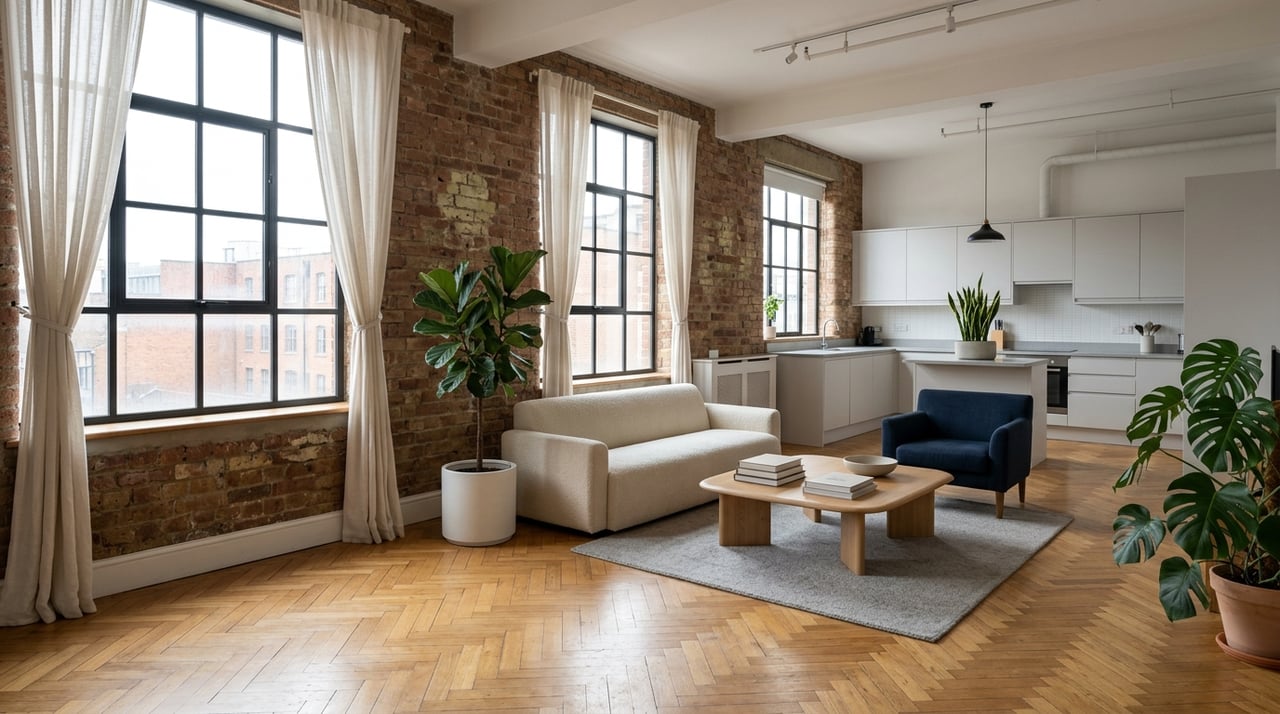
For you as a buyer or renter, that often translates into homes with features like:
- Higher-than-average ceilings
- Large windows
- Wider, more open floorplans
- Distinctive prewar details in converted buildings
- A blend of industrial character and updated interiors
Not every apartment will check every box, but the neighborhood’s building stock creates a strong foundation for that loft feel.
Daily life around Madison Square Park
Loft-style living is not only about the apartment. It is also about what happens when you step outside. In Flatiron, Madison Square Park is one of the neighborhood’s main lifestyle anchors.
The Madison Square Park Conservancy notes that the park sits between Fifth and Madison Avenues from 23rd to 26th Streets and is open daily. It also includes Jemmy’s Dog Run, with separate spaces for large and small dogs, plus the Police Officer Moira Ann Smith Playground.
That matters because a dense, central Manhattan neighborhood feels more livable when there is real outdoor space woven into everyday routines. Whether you are grabbing coffee, meeting friends, walking your dog, or just taking a break from your screen, the park adds a welcome counterbalance to the district’s busy pace.
Flatiron Plazas add street energy
If Madison Square Park is the green anchor, the Flatiron Plazas are the neighborhood’s urban living room. According to NYC, the plazas are located around 23rd Street, Fifth Avenue, and Broadway, with moveable tables and chairs, shade umbrellas, seasonal plantings, and food-and-beverage kiosks. The city also estimates foot traffic at more than 50,000 people per day.
That level of activity helps define the day-to-day atmosphere in Flatiron. If you love people-watching, easy meetups, and a neighborhood that feels switched on, the plazas are a real plus. If you are considering a purchase nearby, it is worth understanding that this convenience and energy can also mean more daytime activity on surrounding streets.
Dining and convenience are major perks
One of the easiest things to appreciate about Flatiron is how much you can do on foot. The Flatiron NoMad Partnership’s district guide highlights more than 100 eateries across a range of cuisines and dietary preferences, along with neighborhood resources for coffee, lunch, shopping, fitness, happy hour, and events.
For many buyers and renters, that convenience is part of the loft lifestyle equation. An open, flexible apartment feels even better when your daily routine is streamlined outside the building too. Flatiron supports a car-light lifestyle with easy access to food, services, and public spaces in a compact area.
Transit makes the neighborhood practical
Flatiron’s central location is not just attractive on a map. It is also highly functional for commuting and everyday movement around the city. MTA line maps show access to the 6 train at 23 St and 28 St on Park Avenue South, the F and M at 23 St on Sixth Avenue, and the R and W at 23 St and 28 St on Broadway.
City Planning also notes nearby PATH access at 23rd Street on Sixth Avenue and nine bus lines serving the immediate area. For you, that can mean shorter trips, more flexibility, and a lifestyle that depends less on planning every errand around a car. In a neighborhood with a strong live-work identity, that kind of connectivity matters.
What to expect from the housing mix
Flatiron is not a one-note housing market. The area includes historic commercial conversions as well as newer residential development, which gives you a broader range of options than the term “loft” might suggest. City Planning notes recent residential repositioning and tower development in the district, alongside its older mixed-use fabric.
That means your options may include:
- Loft-like residences in former commercial buildings
- Updated homes in store-and-loft or warehouse-style properties
- Newer condos with more modern finishes and services
- Rentals that offer open layouts without full historic loft details
The right fit depends on what matters most to you. Some buyers prioritize authenticity and architectural character. Others want elevator buildings, newer systems, or a more full-service setup. Flatiron can support both approaches, but the inventory is nuanced.
Is Flatiron right for your lifestyle?
Flatiron tends to appeal to buyers and renters who want central Manhattan access, design character, and everyday convenience in one place. The neighborhood is especially compelling if you value open-plan living, historic architecture, strong transit, and a vibrant street-level environment.
At the same time, it helps to be realistic about what the area is. Official planning materials still describe Flatiron as primarily commercial, even as residential use continues to grow. So if you are considering a loft-style home here, think beyond the apartment itself and ask how you feel about the pace, foot traffic, and mixed-use nature of the district.
How to evaluate a Flatiron loft-style home
When you tour homes in Flatiron, focus on both the apartment and the building’s original DNA. A great listing photo can highlight volume and light, but in person you will want to confirm how the layout actually lives, how much openness you are getting, and how the surrounding block feels during different parts of the day.
A few smart questions to keep in mind are:
- Is this a true conversion or a loft-inspired newer residence?
- How much original character does the home retain?
- What is the daytime and evening street activity like?
- How close are you to transit, parks, and daily essentials?
- Does the building style match your priorities for service, privacy, and upkeep?
That kind of block-by-block and building-by-building analysis is where local guidance becomes especially valuable.
If you are exploring Flatiron loft-style living, Chris Pasquale can help you compare building types, understand the tradeoffs between character and convenience, and find the right fit for your goals in Manhattan.
FAQs
What does loft-style living in Flatiron usually mean?
- In Flatiron, loft-style living usually refers to homes created from older commercial buildings or loft-like residences with open layouts, larger windows, and character tied to historic building stock.
Are Flatiron apartments true lofts or loft-like conversions?
- Most are loft-like conversions in former commercial buildings, with some newer residential towers mixed into the neighborhood housing inventory.
What makes Flatiron appealing for daily Manhattan living?
- Flatiron offers strong transit access, Madison Square Park, the Flatiron Plazas, and a dense mix of dining, shopping, and everyday services within walking distance.
Is Flatiron a quiet residential neighborhood in Manhattan?
- Flatiron is generally better described as a mixed-use, active district with substantial commercial presence rather than a quiet residential enclave.
What transit options support Flatiron loft-style living?
- The neighborhood is served by the 6, F, M, R, and W trains, nearby PATH access at 23rd Street on Sixth Avenue, and multiple bus lines in the immediate area.
What should you look for when buying a loft-style home in Flatiron?
- You should evaluate the building type, layout, natural light, original character, nearby street activity, and access to transit and neighborhood amenities before making a decision.