Ask anyone who has lived in Turtle Bay for more than a few Septembers what happens when the General Assembly convenes, and you'll get some version of the same story: the whole neighborhood locks down, nothing moves, and you might as well leave town. That story isn't wrong exactly. It's just bigger than the facts support.
The frozen zone that forms every year around UN Headquarters is real, and it's genuinely disruptive if you live inside it. But it's also an avenue-bound box, not a neighborhood-wide siege, and the difference matters if you're trying to plan a week around it rather than just dread it.
The Zone Is an Avenue-Bound Box, Not a Neighborhood
Turtle Bay runs roughly from 42nd to 53rd Street, First Avenue to Lexington. The security perimeter that forms during UN General Assembly High-Level Week does not. Based on the pattern the NYPD has followed in recent years, closures concentrate on First Avenue between 42nd and 48th Streets, plus the cross streets from 44th through 48th between First and Second Avenue. Everything west of Second Avenue, on those same numbered streets, typically stays open to normal traffic.
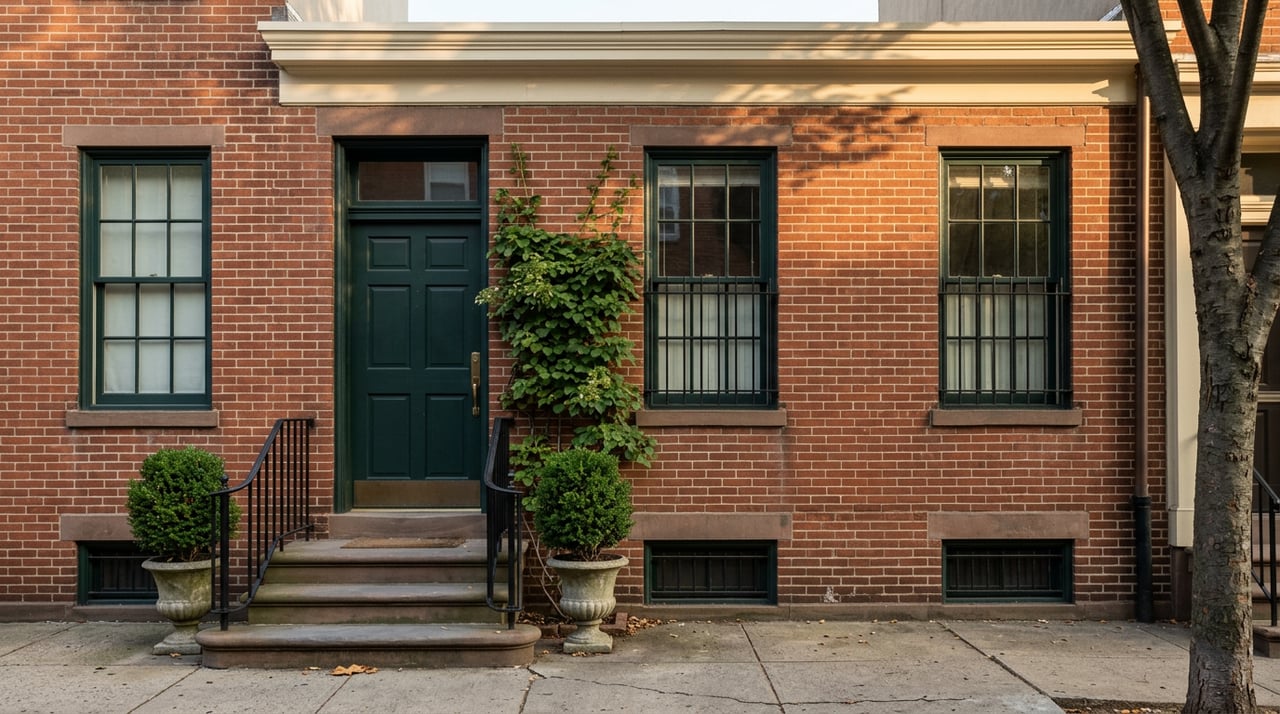
That last point is easy to miss and worth sitting with. A block of East 48th Street can be checkpoint-and-barricade territory between First and Second Avenue, then return to ordinary sidewalk life the moment you cross Second. The Turtle Bay Gardens Historic District, the cluster of twenty rowhouses on East 48th and 49th between Second and Third Avenue built in the 1860s and reorganized into a shared interior garden around 1918 to 1920 by Charlotte Hunnewell Sorchan, sits two avenues clear of the wall of security that forms on the same street numbers closer to the river. Katharine Hepburn owned a house there from 1932 until her death in 2003, and nothing about UN week touches that block.
Why the Session Opening Isn't the Story
The 81st session of the UN General Assembly opens on Tuesday, September 8, 2026. If you're timing your errands around that date, don't bother. The opening is procedural, a gavel and a handover, and it does nothing to First Avenue. The actual disruption arrives with High-Level Week, scheduled for September 22 through 28, when heads of state and their motorcades show up for the General Debate.
Even within that window, the days aren't uniform. The General Debate sits September 22 through 26 and again on the 28th, with no session on Sunday the 27th, a quieter day inside an otherwise dense stretch. And the disruption doesn't necessarily end cleanly on the 28th either. The UN has a high-level plenary meeting on the International Day for the Total Elimination of Nuclear Weapons scheduled for September 29, the day after High-Level Week officially closes, which means some residual security presence tends to linger a day past what the calendar suggests.
What the Checkpoints Actually Change
Inside the zone, the specifics that affect daily life have stayed consistent year to year:
- First Avenue closed from 42nd to 48th Street, daily, for the duration
- Cross streets 44th through 48th closed between First and Second Avenue, daily
- The First Avenue tunnel stays open to passenger vehicles and bicycles for through-travel
- Garbage collection restricted to overnight hours, with residents inside the zone asked not to place trash out until after 9 p.m.
- No unattended vehicles or bicycles left inside the security zone, with towing enforced
- FDR Drive sees rolling, intermittent closures as motorcades move, and on-ramps in the 40s can shut with little notice
Dignitary movements tend to cluster in predictable windows, heaviest from about 9 to 11 in the morning as leaders arrive and again in late afternoon and evening around receptions. Midday and anything after 8 p.m. runs noticeably calmer. For anyone crossing town during peak hours, the subway holds up better than a car does. Grand Central sits two avenue blocks from the edge of the zone, and plenty of people who work in Turtle Bay simply switch to rail for the week rather than fight the reroutes.
The Association That's Done This Before
Turtle Bay's ability to absorb this every year without much collective panic traces back to an organization most residents know mainly for its street fair and its bulletin board: the Turtle Bay Association. It was formed in 1957 after a handful of neighbors organized to protest a plan to widen East 49th Street, and the informal meetings that grew out of that fight never really stopped. Today it counts close to 2,000 members and maintains a standing Quality of Life and Safety Committee whose job includes keeping a direct line open to the 17th Precinct and its Neighborhood Coordination Officers, the same relationship that gets tested every time UN week rearranges the neighborhood's traffic and trash pickup.
The association's day-to-day presence is smaller and more social than its committee structure suggests. It hosts happy hours at member businesses like Ánimo, whose renovated space became the site of one such gathering earlier this year, and it runs a bulletin board and business directory meant to keep foot traffic flowing to neighborhood shops even when the streets around them are harder to reach. That kind of ongoing, low-stakes presence is part of why the organization has standing to actually be useful when the disruptive weeks hit. It isn't showing up only in September.
Turtle Bay's September, Laid Out
| Date | What's Happening | Effect on the Street |
|---|---|---|
| Sept 8 | 81st session opens (procedural) | None |
| ~Sept 20-21 | Security zone typically stands up | Barricades and checkpoints begin appearing |
| Sept 22-26 | General Debate sits | Peak closures, heaviest 9-11 a.m. and late afternoon |
| Sept 27 | No General Debate session | Quieter day inside the window |
| Sept 28 | General Debate resumes | Closures continue |
| Sept 29 | Nuclear weapons plenary | Residual security presence likely |
| Oct 3 | Taste of Turtle Bay | Streets reopen to the neighborhood's own event |
The Neighborhood Reopens Its Own Streets
That last line on the calendar is the part that tends to get left out of every UN week explainer, and it's the detail that actually says something about how this neighborhood works. Roughly a week after the last motorcade clears First Avenue, the Turtle Bay Association throws the Taste of Turtle Bay, its street fair, on Saturday, October 3, from 2 to 5 p.m. It isn't scheduled in spite of UN week. It's scheduled right after it, on streets that were, days earlier, checkpoint territory. The same association whose safety committee spends September managing barricades spends the first Saturday of October handing those same blocks back to the neighborhood on its own terms.
That's the piece worth remembering if you live here: Turtle Bay doesn't treat High-Level Week as an emergency to survive once a year. It treats it as a known stretch on a longer calendar, one bookended by an organization that's been managing exactly this kind of disruption, in one form or another, since it first got together over a street-widening plan in 1957.
If you're weighing what it actually means to live inside that rhythm year over year, or you're curious what a Turtle Bay co-op or condo looks like once you factor in blocks like these, Chris Pasquale knows this neighborhood at exactly this level of detail. Reach out anytime to talk through what's actually happening on your block, in September or any other month.
This article is general information, not legal, tax or financial advice. Consult a qualified professional about your situation.